High-speed rail environments place demanding requirements on suspension and damping systems. At increasing speeds, even small track irregularities can generate significant vibration, noise and dynamic loads throughout the vehicle structure. Vibration affects both vehicle and passengers: it wears out components and makes traveling unpleasant.
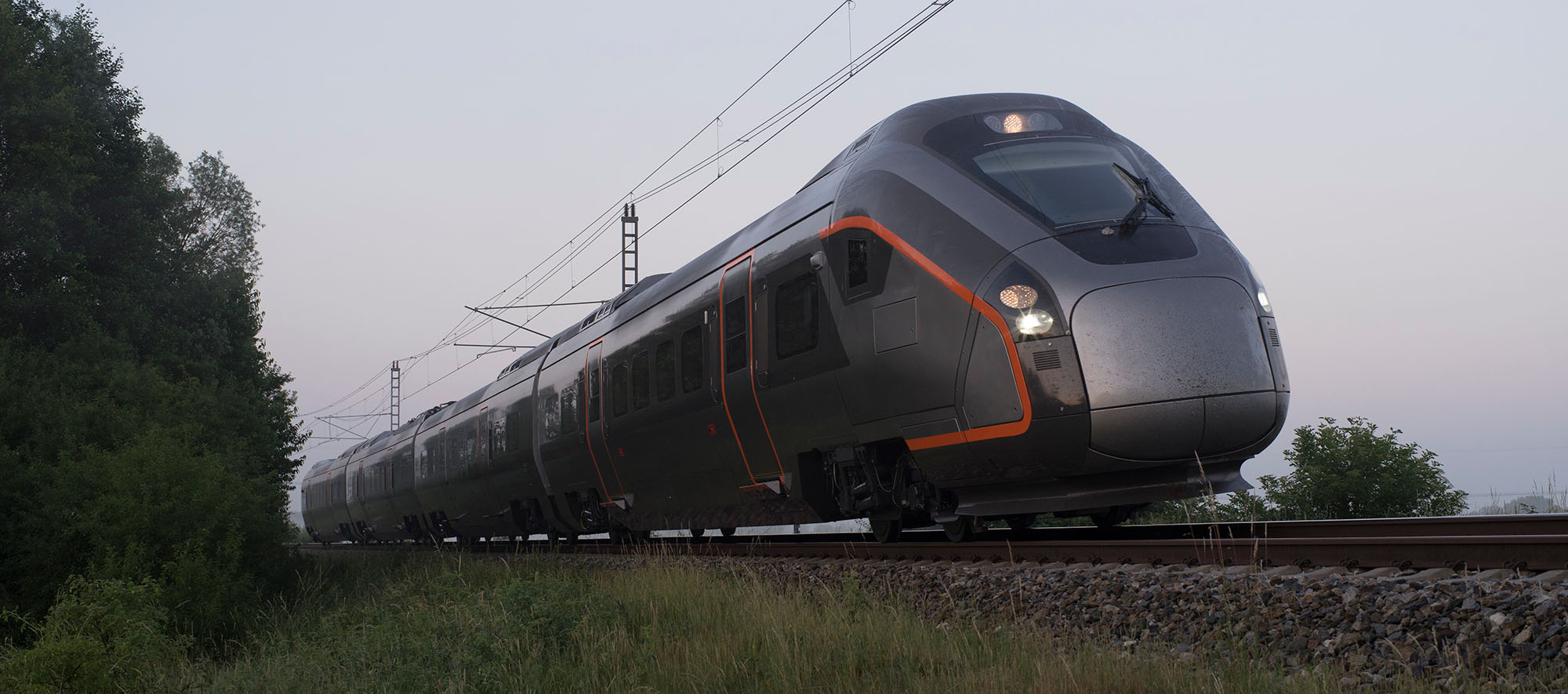
For passengers, these effects are experienced as:
- uncomfortable vibration
- cabin noise
- instability during travel
For operators and manufacturers, the consequences of vibrations are broader:
- accelerated component wear
- increased maintenance requirements
- structural fatigue
- reduced operational reliability
Effective damping plays a critical role in maintaining both passenger comfort and long-term vehicle performance in demanding rail applications.
The Effect of Track Irregularities at High Speeds
Rail tracks are never perfectly smooth. Minor imperfections, rail joints, switches, thermal expansion and long-term wear continuously introduce dynamic forces and vibration into the vehicle.
At lower speeds, these irregularities may remain almost unnoticed. In high-speed applications, however, the same movements generate substantially higher forces and oscillations.
As velocity increases:
- vibration frequencies rise
- resonance risks increase
- dynamic wheel loads become more severe
- structural stress propagates through the bogie and vehicle body
Without properly optimized damping characteristics, these vibrations can amplify throughout the system and negatively affect both ride comfort and component lifespan.
Controlling Resonance and Vibration
One of the key challenges in high-speed rail systems is controlling resonance. When suspension components, vehicle structures and track-induced excitation frequencies interact, uncontrolled oscillation can occur. This may lead to:
- excessive lateral movement
- cabin vibration
- increased noise levels
- instability at high speeds
- premature wear of suspension and structural components
SV-SHOCKS’ dampers play an important role for controlling these dynamic responses.
Our well-designed damping systems help:
- stabilize vehicle movement
- reduce oscillation amplitudes
- minimize vibration transfer into passenger areas
- improve overall ride dynamics
The result is a smoother, quieter and more predictable travel experience.
At SV-SHOCKS, we manufacture premium shock absorbers rooted in precision Finnish engineering — built to withstand the challenges that are thrown our way.
Read more: Railway shock absorbers for all conditions and railway speeds
Operating in extreme conditions often accelerates wear and increases maintenance requirements. Learn how retrofit dampers can reduce lifecycle costs and extend equipment life.